
Keranjang Anda kosong!


Blockchain technology has revolutionized the way digital transactions are conducted, providing unprecedented levels of transparency and trustworthiness. As more organizations and individuals rely on blockchain for financial, voting, and resource distribution systems, verifying fairness claims becomes essential. Blockchain analytics offers powerful tools and methodologies to independently confirm whether these claims hold true. This article explores how leveraging blockchain data can help validate fairness, supported by real-world examples, research, and practical steps.
Key Principles Behind Blockchain Transparency and Trustworthiness
How Blockchain’s Immutable Ledger Ensures Data Integrity for Fairness Claims
At the core of blockchain’s transparency is its immutable ledger, which records every transaction in a manner that cannot be altered retroactively. This characteristic ensures data integrity, meaning once a transaction is confirmed and added, it remains tamper-proof. For fairness claims—such as equitable distribution of tokens or unbiased voting results—this immutability provides a trustworthy record that can be independently verified. For example, in the case of the Ethereum blockchain, every token transfer is permanently stored with cryptographic proofs, allowing auditors to trace the entire history of transactions without relying on third-party intermediaries.
Role of Decentralization in Reducing Bias and Manipulation
Decentralization distributes control across multiple nodes, making it difficult for any single entity to manipulate the data. This architecture minimizes the risk of bias, censorship, or fraud, which are common concerns in centralized systems. For instance, in decentralized voting applications built on blockchain, multiple independent nodes validate each vote, reducing the likelihood of tampering and ensuring the process remains fair and transparent. The collective validation process enhances trust in fairness claims, as no single party has overriding control over the data.
Understanding Public Accessibility of Blockchain Records for Independent Verification
Most public blockchains make transaction data openly accessible, enabling anyone with an internet connection to verify transactions independently. This transparency is fundamental to confirming fairness claims, as third-party analysts or watchdog organizations can scrutinize transaction histories without needing authorization from the involved parties. For example, blockchain explorers like Etherscan or Blockchain.com allow users to search and analyze transaction details, providing a clear audit trail that supports or challenges fairness assertions.
Utilizing Analytical Tools to Detect Fairness Violations in Blockchain Records
Applying Pattern Recognition to Identify Anomalous Transaction Behavior
Pattern recognition algorithms analyze transaction data to detect irregularities that may indicate unfair practices. For example, clustering similar transactions or identifying sudden spikes can reveal manipulative behaviors, such as vote-buying or resource hoarding. Machine learning models trained on historical data can flag anomalies that deviate from typical transaction patterns, aiding auditors in pinpointing potential fairness violations.
Using Quantitative Metrics to Measure Discrepancies in Distribution Processes
Quantitative analysis involves calculating metrics such as Gini coefficients, entropy, or distribution ratios to assess how equitably resources or rewards are allocated. For instance, in a blockchain-based reward system, a high Gini coefficient might suggest concentration of rewards among a few participants, raising questions about fairness. By systematically measuring these metrics across transaction datasets, analysts can objectively evaluate whether distribution processes are equitable.
Case Studies Showing How Analytics Uncover Systematic Biases
Several real-world case studies illustrate the power of blockchain analytics in detecting unfair practices. In one instance, a decentralized finance (DeFi) platform was scrutinized for potential front-running attacks, where malicious actors exploited transaction ordering. Analytics tools identified suspicious transaction clustering and timing, leading to the discovery of systematic bias against smaller investors. Similarly, analysis of voting records on a blockchain-based governance platform revealed vote manipulation through coordinated voting patterns, prompting further investigation.
Step-by-Step Methodology for Validating Fairness with Blockchain Analytics
Collecting and Preparing Blockchain Data for Analysis
The first step involves extracting relevant data from blockchain explorers or node APIs. Data should include transaction timestamps, sender and receiver addresses, amounts, and smart contract interactions. Data cleaning involves removing duplicates, normalizing formats, and ensuring completeness to facilitate accurate analysis. For example, a researcher examining token distribution might download all transfer records from a specific smart contract over a defined period.
Implementing Algorithms to Cross-Verify Fairness Claims
Once data is prepared, analytical algorithms are applied to test fairness hypotheses. Pattern recognition models can identify abnormal transaction clusters, while statistical tests compare actual distributions against expected equitable scenarios. For example, if a claim states that tokens are evenly distributed, the analyst can calculate the Gini coefficient and compare it to benchmarks. Smart contract event logs can also be examined to verify if rules for fairness are consistently followed.
Interpreting Results to Confirm or Question Fairness Assertions
Interpreting analytics results requires careful consideration. Anomalies or significant disparities suggest potential unfairness, but contextual factors must be evaluated. For example, a high concentration of rewards might be justified by contribution levels. Conversely, evidence of manipulated transaction ordering or suspicious address clustering can undermine fairness claims. As Benjamin Franklin famously said,
“An ounce of prevention is worth a pound of cure.”
Therefore, comprehensive data interpretation helps stakeholders make informed judgments about fairness claims, backed by objective analysis.
| Analytical Method | Purpose | Example |
|---|---|---|
| Pattern Recognition | Detect anomalies in transaction behavior | Identifying clustered transactions indicating collusion |
| Quantitative Metrics | Measure distribution equity | Calculating Gini coefficient for token rewards |
| Smart Contract Analysis | Verify rule adherence | Checking for rule violations in reward distribution logic |
By systematically collecting, analyzing, and interpreting blockchain data, stakeholders can confidently validate fairness claims or identify areas needing improvement, just as players assess the fairness of games like the Sugar Rush 1000 real money game. This process promotes transparency, accountability, and trust in decentralized systems.
Categories
Recent Posts
- Seminar Indonesia Pacific Cultural Connect ‘Beyond the Cultural Exchange’ Digelar di Yogyakarta
- Bukit Songo Papat: Merawat Ingatan Tragedi Merapi 1994, Menyusuri Sejarah, dan Mengembangkan Potensi Desa Hargobinangun

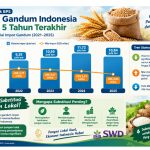
- Menuju Kemandirian Pangan Indonesia: Indonesia Local Flour Initiative Dorong Substitusi Gandum Berbasis Pangan Lokal
- Film Pasukan 1000 Janda Rilis Trailer & Poster, Tayang 12 November

- Festival Kebudayaan Yogyakarta 2026 Resmi Ditutup

Archive
- Oktober 2026
- September 2026
- Agustus 2026
- Juli 2026
- Juni 2026
- Mei 2026
- April 2026
- Maret 2026
- Februari 2026
- Januari 2026
- Desember 2025
- November 2025
- Oktober 2025
- September 2025
- Agustus 2025
- Juli 2025
- Juni 2025
- Mei 2025
- April 2025
- Maret 2025
- Februari 2025
- Januari 2025
- Desember 2024
- November 2024
- Januari 2024
- Juli 2023
- Maret 2023
- Januari 2023
- Desember 2022
- Oktober 2022
Tags
#FKY #Kebudayaan #Pameran #seni Akhir Lusono Bakpia Jogkem Bangunharjo Bantul BMT buka puasa Desa wisata DPS ekonomi kreatif ekosistem ekraf Film Geguritan Iftar Inovasi JAFF Jurnalipreneur.id Jurnalispreneur Jurnalispreneur.id KDMP kolaborasi kota kreatif kreatif kriya kuliner Mie lethek museum Pelatihan jurnalis PINBAS MUI DIY PINBUK Ramadan Ramadhan Silaturahmi TBC Tera View Tim Jurnalispreneur.id UCCN UGM UMBY Umkm Yogyakarta
Social Links
MITRA JURNALISPRENEUR.ID


Tinggalkan Balasan